AI Automation refers to the integration of Artificial Intelligence technologies with automated systems to perform tasks that traditionally required human intelligence. Unlike basic automation, which follows predefined rules, AI automation can transform the Future of Work and Business learn from data, adapt to changes, and make informed decisions. This capability is redefining how businesses operate, scale, and compete in a rapidly evolving digital economy.
Understanding AI Automation
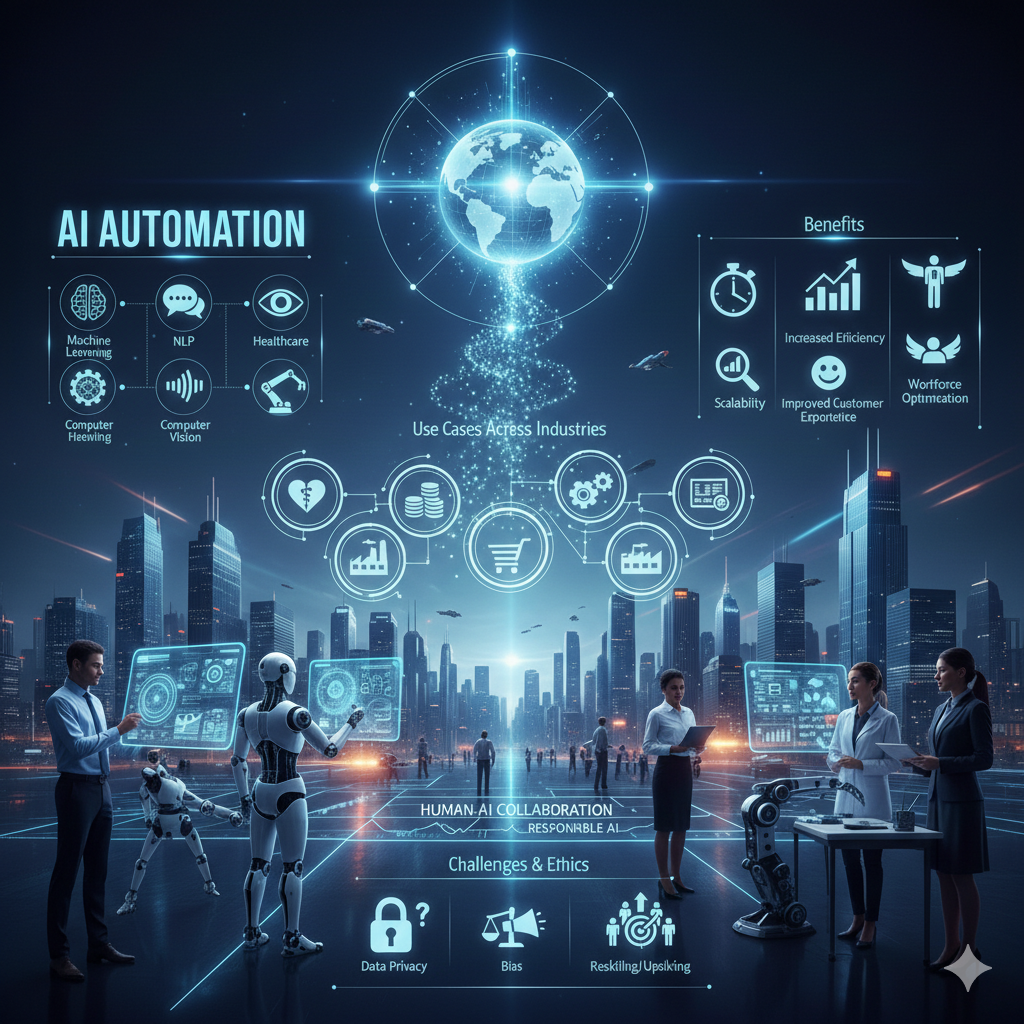
Traditional automation focuses on repetitive, rule-based tasks such as data entry or scheduled operations. AI automation goes a step further by incorporating machine learning, natural language processing, and computer vision. These technologies enable systems to analyze patterns, understand context, and improve performance over time without constant human intervention.
For example, an AI-powered customer support system can understand user queries, respond accurately, and learn from past interactions. Similarly, in manufacturing, AI-driven automation can predict equipment failures and optimize production schedules in real time.
Key Components of AI Automation
AI automation is built on several core technologies:
- Machine Learning (ML): Allows systems to learn from historical data and make predictions or decisions.
- Natural Language Processing (NLP): Enables machines to understand and generate human language, powering chatbots and voice assistants.
- Computer Vision: Helps systems interpret visual data such as images and videos, widely used in quality inspection and security.
- Robotic Process Automation (RPA) with AI: Combines rule-based automation with intelligence, making workflows more flexible and resilient.
Together, these components create intelligent systems capable of handling complex, dynamic tasks.
Benefits of AI Automation
The adoption of AI automation delivers measurable advantages across industries:
- Increased Efficiency: Tasks are completed faster and with fewer errors, reducing operational costs.
- Scalability: Businesses can handle growing workloads without proportionally increasing manpower.
- Improved Decision-Making: AI systems analyze vast datasets to provide insights that support strategic decisions.
- Enhanced Customer Experience: Personalized interactions and faster response times improve satisfaction and retention.
- Workforce Optimization: Employees are freed from repetitive tasks and can focus on creative, strategic, and high-value work.
Use Cases Across Industries
AI automation is not limited to a single sector. Its applications span multiple domains:
- Healthcare: Automated diagnostics, patient scheduling, and predictive analytics for better care delivery.
- Finance: Fraud detection, algorithmic trading, risk assessment, and automated compliance monitoring.
- E-commerce: Personalized recommendations, dynamic pricing, and inventory optimization.
- Manufacturing: Predictive maintenance, quality control, and supply chain optimization.
- Marketing: Automated campaign management, customer segmentation, and performance analytics.
These use cases demonstrate how AI automation drives both operational excellence and innovation.
Challenges and Ethical Considerations
Despite its advantages, AI automation presents challenges that must be addressed. Data privacy and security are critical concerns, as AI systems rely heavily on large datasets. Bias in algorithms can lead to unfair outcomes if training data is not representative. Additionally, workforce displacement remains a key social concern, requiring reskilling and upskilling initiatives.
Responsible AI automation involves transparency, ethical design, and compliance with regulations to ensure trust and long-term sustainability.
The Future of AI Automation
The future of AI automation lies in hyper automation, where multiple AI-driven tools work together to automate entire business processes end to end. As AI models become more advanced and accessible, even small and medium-sized businesses will leverage automation to compete with larger enterprises.
Human-AI collaboration will define the next phase, where AI augments human capabilities rather than replacing them. Organizations that invest early in AI automation, while prioritizing ethics and governance, will gain a significant competitive advantage.
Conclusion
AI automation is no longer a futuristic concept; it is a practical, strategic necessity. By combining intelligence with automation, organizations can achieve higher efficiency, better decision-making, and sustainable growth. The key to success lies in thoughtful implementation—balancing technological innovation with human values and responsibility.